
Prostitution, men and demand
A major focus of TORL was to address the demand for prostitution sex. The campaign argued that the supply of girls and women into the sex trade would not be necessary without male demand, and that the legalisation of sex work enshrines in legislation the right of men to have access to women’s bodies by the payment of money. TORL challenged the fundamental assertion that the State should recognise this demand by introducing laws which give permission to men to buy a person for sex, whilst failing in its responsibility to protect the rights of women from commercial sexual exploitation. TORL also made the link to trafficking citing numerous international instruments and European Directives obligating states to address demand as a critical anti-trafficking measure.1
TORL rejected the claim by sex work advocates that buyers desire mutual, consensual sex and that they are respectful of the women they buy. The campaign cited numerous studies which indicate that gratification of their own sexual needs with no thought or concern for the individual woman is the norm. International surveys with buyers consistently indicate that buyers objectify and denigrate the woman, with many believing that they could do anything to her once they had paid and that the concept of rape did not apply to women in prostitution.2 The analysis of Punter.net Ireland in the ICI research reflects similar attitudes, where the language in their reviews of women is one of entitlement, aggression and consumerism. TORL refuted the myth that the profile of these buyers is one of lonely men in need of company and sex who are unable to engage with women in any other way. The profile of men in Ireland who reported that they buy sex (one in 15) bears out international research that the majority are married or in a relationship and they tend to be highly educated with incomes in the middle range.3
TORL also presented research indicating buyers are indiscriminate in relation to the supply of girls and women made available to them and are rarely concerned about the origin and circumstances of the person being bought. In a five country European study on demand which included Ireland, nearly one-third of buyers reported that they had encountered sellers they believed were being exploited.4 Similarly, interviews with over 100 male sex purchasers in the U.K. found that the majority of men who had purchased sex in indoor facilities were aware of pimping, trafficking, violence and coercive control over the prostituted women they purchased in massage parlours, brothels, and escort agencies.5 However, there is no evidence in either study that this belief deters buyers from purchasing sex from coerced and trafficked women, nor any evidence that they reported these crimes to the authorities. A consistent finding of all studies is that one of the most effective deterrents for buyers is the criminalisation of the purchase of sex.
The Men’s Development Network played a crucial role in the campaign highlighting the important role men can play in challenging sexual exploitation and the commercial sex trade.
Statement by Alan O’Neill, The Men’s Development NetworkThe Role of Men –
|

John Cunningham, Chair, Immigrant Council of Ireland (ICI)
My involvement in the Turn Off the Red Light Campaign started with briefings at board level in the Immigrant Council of Ireland as our front-line team highlighted a trend of victims of trafficking coming on their radar.
While it was clear something was going on which required further investigation I was apprehensive about where these first steps would take us. My views on prostitution as the ‘oldest trade’ were formed some time earlier.
Like most people heading home on a winters night I had seen cars kerb crawling along side streets or business areas of Dublin where most offices had shut up shop for the evening, cars were greeted by women emerging from the shadows and leaning in the window.
I had a view, which I suspect was that of many men, that this was a sub-culture rather than an underworld with prostitution helping women in dire financial straits to pay their way. As long as it was between two consenting adults what harm could it do?
However now what the team at the Immigrant Council of Ireland were relaying seemed different.
The women being referred to our services were not consenting and had dark experiences with the Easter European Mafia, pimps and even family members – this was no frivolous script from Pretty Woman.
I continued informing myself about the issue for a number of months and saw the partnerships the Immigrant Council had with agencies like Ruhama, the Rape Crisis Centres and others.
There was a view forming that something needed to be done and that legal models being used in Nordic countries were the way to go.
To be honest I had questions, the thought of guys on a stag or a sporting weekend with too much drink on board and being prosecuted for making a foolish mistake and paying for sex did not sit comfortably with me at first.
However in 2009 my mind was made up. The research “Globalisation, Sex Trafficking and Prostitution: The Experiences of Migrant Women in Ireland” was conclusive. Prostitution is a cruel, abusive and exploitative trade run by organised crime which can only be defeated by targeting the money at source.
As a member and Chair of the Board I had no qualms in rubber-stamping an approach whereby the Immigrant Council set about forming a coalition to deliver new laws which would target demand.
The coalition started building fast, front-line agencies, women’s and children’s rights groups, faith based organisations, survivors of prostitution and a strong showing of female politicians from across parties and those of no party – but other voices were missing.
Where was the business community and indeed the views of men.
When building a broad coalition it is important that everyone uses there contacts so I began the sometimes uncomfortable work of presenting our evidence in the world of business.
Chambers Ireland and others did spend time examining the arguments and questioning their own outdated views of prostitution – when the crunch came they saw no issue in standing shoulder to shoulder with trade unions in the Turn Off the Red Light movement.
As business people we reject the notion that prostitution and organised crime should be legitimised.
Over the years at press conferences, photo ops, and partner meetings I was proud to stand side by side with the likes of Christy Moore, Liam Doran of the Irish Nurses and Midwives Organisation, Fergus Finlay of Bernardos and Brian Killoran of the Immigrant Council of Ireland in being strong male voices for change.
Being a leader also means you must be ready for that unexpected request and it came for me in 2014 when politicians at Stormont took us by surprise by quickly advancing legal proposals in line with the aims of Turn Off the Red Light.
I joined the hugely impressive and brave survivors of prostitution, trade unionists and others before the Justice Committee in Stormont sharing our work and experiences.
From the DUP to Sinn Fein all listened as we appealed for an All-Island Approach to make sure Ireland North and South would never be a safe haven for pimps.
Our friends at Stormont have beaten us and the law is in full force – moving a large part of the prostitution trade over the border to the South.
In 2015/2016 I also joined fellow campaigners first in the Seanad and then at the Dáil as our laws went through the various debates.
Last minute arm twisting was the order of the day in the corridors outside as well as at various events and conferences where we met politicians.
Whether in Dublin or down the country, the Taoiseach or a Councillor we were ever present and brought our proposals over the final hurdle.
John Cunningham, The Immigrant Council of Ireland

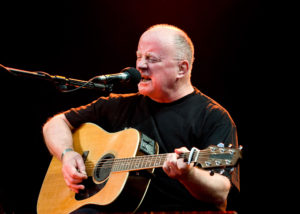
Men’s Engagement
Personal Testimony
Links
Footnotes
1See the UN Palermo Protocol and the Council of Europe Convention on Trafficking. Also Directive 2011/36/EU of the European Parliament and the Council of 5 April on Preventing and Combating Trafficking in Human Beings and Protecting its Victims, and Replacing Council Framework Decision 2002/629/JHA (Trafficking Directive).
2Marttila, A.M. (2008), Desiring the “other”: Prostitution clients on a transnational red-light district in the border area of Finland, Estonia and Russia. Gender Technology and Development, 12 31-5. Farley, M. Bindel, J. and Golding, J. (2009). Men who buy sex: who they buy and what they know. EAVES, London and Prostitution Research and Education, San Francisco. MacLeod, J., Farley, M., Anderson, L. and Golding, J. (2008). Challenging men’s demand for prostitution in Scotland. Glasgow: Glasgow Women’s Support Project.
3Keegan, E. and Yonkova, N. 2014 Stop Traffik! Tackling demand for sexual services of trafficked women and girls. Immigrant Council of Ireland, funded as part of the ISEC Stop Traffik! Programme, European commission
4Ibid 3.
5Farley, M., Bindel, J. and Golding, J. (2009). Men who buy sex: who they buy and what they know. EAVES, London and Prostitution and Research and Education, San Francisco.